“In God we trust; all others must bring data.”
W. Edwards Deming, statistician and the engineer of modern quality management
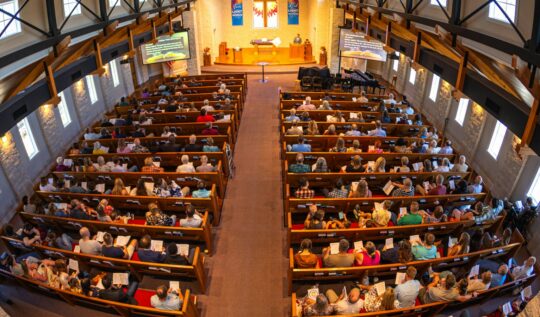
Fourteen weeks into a sanctuary addition, the general contractor sent an email with a number in it. The electrical rough-in for the audio and video systems was not shown on the drawings, the message said, and adding it now would cost thirty-eight thousand dollars and add two weeks to the schedule. The building committee read that email on a Thursday night and spent the weekend feeling sick about it. By Monday they had split into two camps, one convinced the contractor was taking advantage of them and one convinced the church had simply failed to ask for something it obviously needed. Neither camp was in a position to know which was true, because nobody on the owner’s side of the table had read the electrical drawings closely enough to say.
That last sentence is the entire problem, and it has almost nothing to do with the thirty-eight thousand dollars. A construction change order is a request to modify the contract, and every request carries an implicit claim about what the original contract already required. Somebody has to test that claim against the documents before anyone signs anything. When no one on the owner’s side can do that work, the decision comes down to how much the owner trusts the contractor, which is a reasonable way to pick a friend and a poor way to spend a hundred thousand dollars over the life of a project.
A change order is not automatically anyone’s fault
The word carries a sting it does not deserve. Owners hear “change order” and assume someone made a mistake, usually the contractor, occasionally the architect, and the conversation starts from a defensive crouch. In practice, change orders fall into three fairly distinct categories, and the honest answer to who pays depends entirely on which one you are looking at. Sorting the request into the right category is the first real piece of work, and it has to happen before the negotiation rather than during it.
The first category is the owner-directed change. The congregation decides midstream that it wants a commercial kitchen instead of a warming kitchen, or the hotel owner sees the framed guest room and wants the bathroom wall moved eighteen inches. These are legitimate and the owner pays for them, because the owner is buying something that was not in the contract. The only real questions are whether the price is fair and whether the schedule impact is honestly stated, and both are answerable by someone who knows what the work involves.
The second category is the differing or unforeseen condition. Crews open a wall in a 1968 education wing and find wiring nobody documented, or the excavation hits rock at four feet where the soils report suggested eleven. Nobody did anything wrong here. The contractor priced the job from the information available, that information turned out to be incomplete, and the contract almost always allocates this risk to the owner. What a good architect does with this category is not argue about it but reduce how often it happens, which is why accurate documentation of existing conditions is the most reliably profitable money in any renovation budget.
The third category is the one everyone gets uncomfortable about. Something was missing, contradictory, or wrong in the construction documents, and correcting it costs money. This is where an owner needs an architect who will say so plainly rather than one who quietly reclassifies the problem as an owner-directed change and hopes nobody reads the paperwork carefully. It is also where the sanctuary audio rough-in usually lands, because low-voltage systems are often designed by a specialty consultant on a schedule that trails the electrical drawings.
The number that matters is not how many
Owners tend to track change orders the way a patient tracks a fever, watching the count climb and assuming the project is getting sicker. The data does not support that instinct. AIA Contract Documents ran text analytics across 892,457 change orders drawn from 18,229 completed United States building projects and found that the average cost change was roughly four to five percent of contract value, with the typical range on a five to ten million dollar project running from slightly negative to about thirteen percent. More striking, the analysis found little correlation between the sheer number of change orders on a project and how much cost or time it ultimately added. A project with eleven change orders is not in worse shape than a project with three. What the research did find is that timing matters enormously, and that most change orders cluster in the second half of construction, when the owner’s ability to respond has already narrowed to almost nothing.
From the research
“For example, the later a change order is issued in the project lifecycle, the less alternatives an owner has in responding to the change, which may be a source of the larger increase in cost.”
That finding reframes what an architect is actually for during construction. The goal is not zero change orders, which would require drawings that anticipated every condition in a building nobody has built yet. The goal is to move decisions earlier, when the owner still has room to choose between options rather than being handed one price and a crew standing around waiting for an answer. A change order raised in week six is a conversation. The same change order raised in week thirty is an invoice.
Who is actually reading the request
Most owners are surprised to learn how much authority their architect carries once construction starts. Under the standard AIA general conditions used on most commercial and institutional projects in this country, claims between the owner and the contractor go first to an Initial Decision Maker, and if the parties do not name someone else in the agreement, which they usually do not, the architect fills that role by default. The architect reviews the claim, requests supporting information, and renders a decision, and that decision is a condition precedent to mediation and to any binding dispute resolution that follows.
The role comes with a requirement that deserves more attention than it gets. The Initial Decision Maker is obligated not to show partiality to either the owner or the contractor, which means an architect paid by the owner is expected to rule against the owner when the documents say so, and to acknowledge a design error when a design error is what happened. That is an uncomfortable standard, and it is precisely why the character of the firm you hire matters more during construction than it does during design. Anyone can draw a building. Not everyone will tell you that the omission is theirs.
Worth knowing
Unless your owner-contractor agreement names someone else, your architect is the Initial Decision Maker on construction claims and is contractually required to decide them impartially, including when the honest answer is that the drawings were incomplete.
This is where the practical difference between a drafting service and a partner becomes measurable in dollars. Evaluating a request properly means pulling the specification section, comparing it to the drawing sheet and the addenda, checking whether the item appeared in a bid clarification, reviewing the contractor’s labor and material breakdown against what the work actually takes, and then deciding what portion, if any, is a legitimate addition to the contract. Frequently the answer is partial. The scope is real but the pricing is padded, or half of it was covered by an allowance the owner forgot they carried. The most expensive change order is the one nobody on the owner’s side was qualified to question.
The most expensive change order is the one nobody on the owner’s side was qualified to question.
Most of this work happens months before construction
The uncomfortable truth about change orders is that by the time one arrives, the ability to influence it is mostly gone and what remains is negotiation. The real leverage sits back in the design and documentation phases, in decisions that felt procedural at the time and turn out to have been financial. Complete and internally coordinated construction documents produce fewer requests, because there is less ambiguity for anyone to price against later. Bringing the builder into the conversation before the drawings are finished surfaces constructability problems while they are still free to fix.
The same logic applies to how the bids were structured. Allowances set realistically instead of optimistically, alternates priced separately so the owner can see the actual cost of each choice, and a contingency sized to the complexity of the work rather than to a round number all reduce the number of moments where an owner is forced to react. When bids do come in high, the way a firm responds to that news tells you a great deal about how it will handle the harder conversations six months later, when the concrete is already poured.
Worth asking
What happens if the change order is our architect’s mistake?
An error in the documents does not automatically make the architect financially responsible for the whole cost. The usual test is betterment, meaning the owner pays for value they would have paid for anyway had it been drawn correctly, while the incremental cost of doing the work late and out of sequence is a different conversation. What you should expect is a firm that finds its own errors before you do.
How much contingency should we actually be carrying?
The common rule of thumb puts owner contingency at five to ten percent of construction cost, but the number should follow the risk profile of your project rather than a convention. New construction on a clean site with complete documents sits at the low end, while a phased renovation of a fifty-year-old occupied building belongs at the high end or above it. Ask your architect to justify the percentage against your project, not an industry average.
Can we simply refuse a change order?
You can decline the scope, and sometimes that is the right call on owner-directed additions that felt urgent and were not. You cannot decline a condition the contract already allocates to you, such as a genuine differing site condition, without creating a claim. The useful middle ground is to ask what the alternatives are, because a request framed as one price is often three options nobody has developed yet.
We have sat on the owner’s side of that Thursday night email more times than we can count, across churches, commercial buildings, hotels, and franchise locations, and the pattern rarely changes. The request arrives, the room divides, and what settles it is not conviction but documentation. Our work during construction is to read the claim against the contract, price the alternatives, tell you which category the request falls into even when the honest answer reflects on us, and hand you a recommendation you can defend to a board or a congregation. Twenty-five years and more than a thousand church projects have taught us that owners do not need an architect who promises there will be no surprises. They need one who is still standing next to them when there is. If you have a project underway, or one that has not started yet, we would welcome the conversation.
Let’s Talk About Your Project
Every project starts with a conversation. If you have something in mind, or just a question, reach out and we will get back to you within one business day.