For most of the past century, commercial and institutional construction has been built around two primary structural systems: steel and concrete. They are reliable, code-tested, and understood by virtually every engineer and contractor in the industry. What they are not, increasingly, is the only serious option. Mass timber has moved from architectural curiosity to credible construction strategy, and the pace of adoption is accelerating. As of early 2026, there are nearly 2,800 multi-family, commercial, or institutional mass timber projects either completed or in active development in the United States, a figure that would have seemed implausible a decade ago. Understanding what is driving that shift, and what it actually demands from the design and construction process, is worth any developer or institutional owner’s time before they begin their next project.
This is not a post about sustainability trends in the abstract. Our clients need to make decisions that work for their specific program, budget, and site. The case for mass timber rests on more than its carbon story, and it also carries real requirements that clients need to understand before they commit. Both sides of that equation are worth examining honestly.
What Mass Timber Actually Is
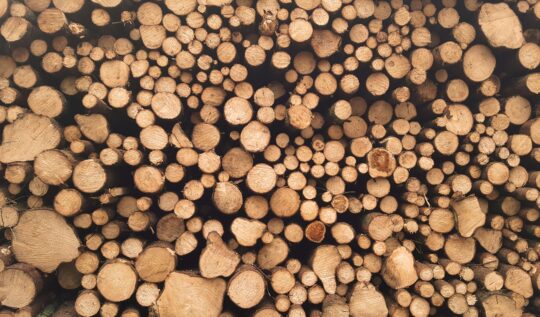
Mass timber is an umbrella term for a family of engineered wood products that behave structurally like steel or concrete but are manufactured from wood, typically softwoods like Douglas fir, spruce, or southern yellow pine. The most common forms are cross-laminated timber, known as CLT, which is produced by layering dimensional lumber in alternating directions and bonding them under pressure; glulam, which is glue-laminated timber used for beams and columns; and nail-laminated timber, which stacks boards on edge and is particularly useful for floors and decking. What makes these products significant is not that they are wood, which architects have used structurally for centuries, but that they are engineered to consistent, predictable performance standards, can be fabricated with high precision at a mill before arriving at the job site, and are available in sizes and spans that conventional dimensional lumber cannot achieve. A CLT floor panel that arrives at the site already cut to dimension and ready to set represents a fundamentally different construction logic than a cast-in-place concrete deck.
Why the Market Is Moving Toward It
The reasons developers and institutional clients are choosing mass timber in 2026 are practical before they are philosophical. Speed is probably the most significant factor. Because mass timber components are fabricated off-site to the specific dimensions determined by the structural drawings, the erection process on site is faster and less dependent on large skilled-labor crews than conventional steel or concrete construction. Projects using prefabricated mass timber components consistently report 20 to 50 percent faster delivery on the structural phase compared to site-built equivalents, and that schedule compression translates directly to reduced carrying costs for the owner. Labor scarcity has also sharpened this advantage: in a construction market where skilled tradespeople are increasingly difficult to find, prefabricated structural systems reduce the on-site labor intensity of the most technically demanding phases of the work.
The sustainability case is real but requires some nuance. Mass timber’s carbon story rests on two things: the biogenic carbon stored in the wood itself, which offsets the embodied carbon of the structure, and the lower energy intensity of wood fabrication compared to steel production or concrete manufacturing. For owners with sustainability commitments or who are pursuing green building certifications, mass timber provides a structural argument that no amount of recycled-content finish specification can match on its own. The analysis from March Associates on why developers are choosing mass timber in 2026 identifies aesthetics alongside speed and sustainability as a primary driver, and that point deserves emphasis. Exposed mass timber interiors create a warmth, texture, and visual interest that steel and concrete simply do not, and in commercial leasing, hospitality, and institutional contexts, that translates to a user-experience difference that tenants and congregations notice and respond to.
What It Requires That Clients Often Do Not Expect
Here is the place where the conversation gets important for owners who are seriously evaluating mass timber. The construction logic of mass timber is fundamentally different from conventional framing or structural steel, and that difference has implications for the design process that begin far earlier than most clients anticipate. Mass timber procurement decisions need to be made during schematic design, not after construction documents are complete. This is the opposite of how most clients think about material specification, where choices are finalized late in design development or during the bidding process. With mass timber, the structural system shapes everything: the floor-to-floor heights, the coordination of mechanical and electrical systems through the structure, the connection details, and the sequencing of erection. If a supplier is not engaged early, and if the structural engineer is not coordinating with that supplier’s fabrication standards from the beginning, the result is expensive redesigns late in the process or field modifications that eliminate much of the schedule advantage the system was supposed to deliver.
Fire engineering is another area where early expertise matters. The International Building Code has expanded what is permissible in mass timber construction through a series of amendments over the past several years, and performance-based fire design now enables structures that would previously have required steel. But the analysis required to demonstrate code compliance for taller or more complex mass timber buildings is specialized work that not every structural or fire engineer has performed before. Acoustics and vibration are also considerations unique to wood structures: mass timber floors behave differently from concrete decks under foot traffic and mechanical loads, and without proper detailing, the result can be an acoustically uncomfortable space. None of these challenges are disqualifying. They are simply the kind of considerations that need to be worked through early, by a design team that has encountered them before and knows how to address them within the project’s constraints.
Where Mass Timber Makes Sense for Our Clients
The church and institutional market is particularly well-positioned to benefit from mass timber construction in the right applications. A mass timber sanctuary roof or fellowship hall brings an aesthetic quality that resonates with the warmth and community feeling that most congregations are trying to create in their facilities. The exposed structural honesty of a CLT ceiling, with its visible grain and natural color variation, achieves something that a painted steel frame or a dropped acoustic tile ceiling cannot. For church clients who are asking how to build something that feels welcoming and lasting on a constrained budget, mass timber is worth a serious evaluation, particularly for large-span spaces like sanctuaries, gymnasiums, and multi-purpose halls where the structural span requirements make the system competitive on cost.
For commercial developers, the biophilic design angle has become a genuine leasing argument in office, mixed-use, and hospitality projects. Buildings with exposed mass timber interiors command tenant interest in a market where differentiating a commercial space is increasingly difficult. Hotel owners in particular have found that a mass timber lobby or guest room wing creates a distinctive character that contributes to the property’s brand in a way that conventional construction cannot replicate. That said, not every project is a candidate. Mass timber carries a cost premium over conventional light-frame wood construction, and in some markets and building types the economics do not pencil. The supplier base, while growing, remains more limited than for steel or concrete, which introduces procurement risk that requires mitigation through early engagement. Local contractor familiarity with the system also varies significantly by region, which is a real consideration when evaluating whether the schedule advantages will actually materialize on your specific project.
Why Pre-Design Is the Right Time to Evaluate This
The decisions that determine whether mass timber is the right structural system for a given project need to be made before the design is set, not after. This is one of the reasons we emphasize thorough pre-design work on every project. Understanding the site, the program, the budget, and the owner’s priorities before committing to a structural strategy is the only way to make that evaluation clearly. A congregation that knows it wants a 300-seat sanctuary with a large-span exposed roof system, a constrained budget, and a strong preference for natural materials is a strong candidate for a mass timber feasibility study. A commercial developer weighing the leasing premium of a distinctive office building against the procurement risk of a limited supplier base needs that analysis done before schematic design begins. As we explored in our recent post on what separates a genuine architecture partner from a transactional firm, the value of experienced guidance concentrates most in the questions you have not yet thought to ask.
Mass timber is not a trend in the sense of a passing fashion. It is a structural technology that has reached commercial viability and is being adopted across virtually every building type for reasons that are substantive and durable. Whether it is right for your specific project depends on the specifics, and getting that answer accurately requires working with people who have engaged with the system in detail. We have been tracking mass timber’s trajectory carefully and are well-positioned to help owners evaluate it honestly and design with it effectively when it fits. If you are in the planning stages of a significant construction project and want to explore what mass timber could offer, that is a conversation we are glad to have.